Added value at high quality products
Have you ever asked yourself how a price is created for something considered as being expensive? What if I want to offer a high quality product, with added value but it is already available at the market at lower price and lower quality?
Many companies in Germany calculate their prices by summing up their cost and adding a percentage for margin. The so call cost-plus-method.
In higher price segments I have to explain
of my product compare to competitive offerings. What is the difference between my product and competitor’s product?That’s why price strategies in this segment are mostly added-value-strategies.
What added value realy is
Added value is everything that makes life easier or better from customer perspective. This could be features like availability, support, environment friendliness, functionality, accessories or spare parts and many more.
For a business owner and his marketing team that means to take the perspective of the customer. Not everyone has the same need or expectation. Choosing the right customer group to focus on is one of the key aspects to be able to create a matching price strategy. The values highlighted should match with the core values identified for that specific group.
Know where the pepper grows
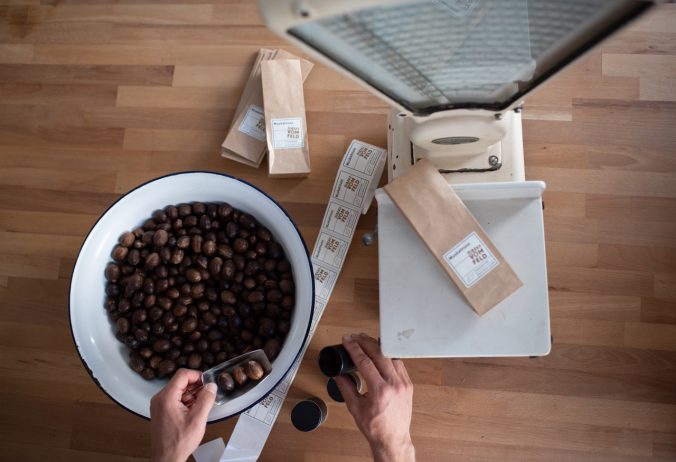
In Chemnitz there is a company called “Direkt vom Feld” which means something like direct from the farm or acker. They sell high quality, ecological grown herbs and spices. If salt, pepper, cinnamon or thyme, Richard Friedrich, Founder of the company know all his suppliers in person and takes his customer on his visits.
What do you think if you are looking for black pepper and you should pay 8€ for it? Many acquaintance would respond with “ughhh”. They are used to go into the super market and buy the spice they need over there. Pepper is available on the shelf same way as pasta, tomato or marmalade. It is available in almost every super market and they won’t realize a difference between the offerings.
Richard and his customers would. They are people which would call food and cooking as their hobby. Their passion are differences in taste, diversity, intensity, richness, pureness and the origin of the products.
How to communicate the added value
“Direkt vom Feld” takes there customers on a journey. They share the interest and the wow feeling about the backside of the spices offered. When Richard is visiting his suppliers, the farmers that grow the herbs and spices, he is there to check the quality as well as the conditions of farming. The farmers themselves have to earn more money so the ecologic farming pays out and they can feed their families even with smaller quantities grown.
So finally you cannot compare these products with the one from the super market. That’s why the price can’t be the same. Prices of products with high quality should be higher than prices for mass products as available in the super market. Studies showed that highly prices products are more appreciated and valued than products with low price. If something cost nothing (or too little) it is recognized as not worthy. You can check yourself, how do you deal with free give away. How much have been thrown away after a couple of days…
Added value and discounts
In a price strategy dealing with high-class products discounts have to be used carefully. Using discount too often, you risk that you reduce the assumed value of your products. Customers will buy based on the discount price as this is the realistic one for them. Your normal price can be judged as too expensive in that case. If you use a discount there should be a realistic reason behind. Like selling of stock or a very special anniversary. It needs to be clear that this is an exception that your regular customers do not feel bullied having paid the higher price.
As a customer of Richard you often feel: “…with this product I do something good for me and the farmers”. You might do deep investigations for dishes to use the products in the best way possible and proudly tell your friends which great products you’ve used to make the food taste that good. They see the travel reports Richard does and have the feeling they can smell all that in the spice they chose.
If you’re brought to the manufacturer or the farmer the chili will taste spicier, the cinnamon more intense and the bell pepper will show more volume. You can identify with the brand and get confirmation that you purchase was something good. Customer of “Direkt vom Feld” do not buy because of the price, they buy because of the features of the products – which is their added value.
So finally you can see that added value and price strategy need to match. Not only corporate identity and packaging have to support high quality, worthiness and consciousness but also the price.